
Rachel Ann Nunes

Rachel Ann Nunes is the author of thirty books, ranging from romance and suspense to women’s fiction and family drama. Her picture book The Secret of the King was chosen in Utah by the Governor’s Commission on Literacy to be awarded to all Utah grade schools as part of the Read With A Child For 20 Minutes Per Day program. Her novels The Independence Club (2007) and Fields of Home (2008) were both chosen as finalists for a Whitney Award. Her most recent book is Imprints, a paranormal romance.

What was the first story you ever wrote?

The first book I ever wrote was a science fiction novel called The Stone Holders. It first had about 50,000 words but grew to over 120,000. Then I wrote a nonfiction story about my mission. Both of these are unpublished.

These were followed by a book called In Your Place, which I call my “Saturday’s Warrior novel,” because Saturday’s Warrior was popular when I was growing up and it inspired the book. Eventually, In Your Place was published, faults and all, but only after I had a dozen other novels published. The next book I wrote was Ariana: The Making of a Queen, which was the first of my novels that was actually published.

Tell us the story behind publishing Ariana: The Making of a Queen.

The idea for Ariana: The Making of a Queen was inspired by a fellow sister missionary I met while I was serving in Portugal. I didn’t know much of her personal story, but what I heard inspired me when I eventually began to write. Ariana is in no way her story, of course, but the real-life events were definitely pivotal in pointing my imagination in the right direction. Other experiences on my mission, like teaching and working with members, were also necessary to writing that book, as was living in a foreign setting for so long.

In addition, my father was a college French professor for most of my growing up years, and my entire family went on a BYU study abroad to France for six months when I was eleven. In France I had personal experiences with my siblings that I put in my book, especially the scenes with Ariana and her brother wandering around Paris. My stay in France was where my love for languages and traveling began.
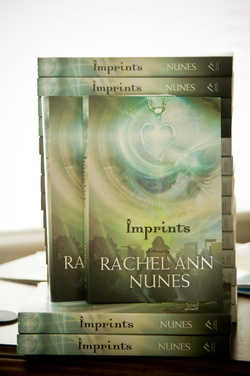
Tell us about Imprints, your newest book. What made you decide to write a story about the paranormal?

I cut my teeth on science fiction and fantasy. I remember when I was eleven reading one story that fascinated me long after I finished it. I wished there was a sequel, or at least that I could find the novel again at the bookmobile in Highland, Utah, where I lived.

I never did, but it was about then that I decided to become an author and write the book I wanted to read myself. That eventually became The Stone Holders, the first book I ever wrote but never published. At some point, I became aware of the few LDS novels being published, and after reading them, I decided to write some of my own. It’s been so successful that it was easy and fun to continue. Eventually, my love for sci-fi and fantasy, especially in a contemporary setting, resurfaced. As I read avidly in the national market, I realized there were no clean contemporary sci-fi and fantasy novels for adults, and I wanted to change that. I wanted to write something that gave people, especially our young people, a good read without having to skip pages due to content.

So I wrote Imprints, and Shadow Mountain (Deseret Book’s national imprint) took the plunge to publish it. I’m grateful for the chance they gave me to take Imprints to my readers and hope they’ll be open to similar books.

However, I should add that not every member of the Church believes these sci-fi/fantasy or “paranormal” books should be carried by Deseret Book. I argue vehemently that they need to be carried there. In fact, I wrote an open letter to readers outlining why I feel so strongly. You can see that letter on the blog for the Association for Mormon Letters.
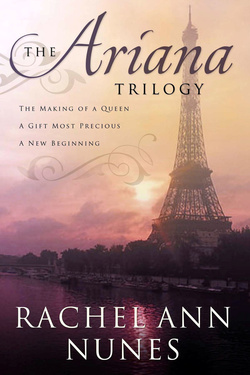
Which book has been the most difficult to write? Which has been your favorite?

The most difficult book to write for me was A Heartbeat Away. As a mother, the idea of having my child kidnapped often kept me up during the long five months it took me to finish that novel.

The book that’s my favorite so far is always the current novel I’m working on. It’s going to be the best! Then I finish my baby, send it off to school, and start on my new best favorite. I’m fickle that way.

What projects do you have in the works?

I’m working on the sequel to Imprints, which is for the LDS audience but contains no overt LDS elements, as well as an LDS novel that came to me recently out of the blue. I’m really excited about both.

Describe a typical day. How do you manage to write while running a household of six children?

My typical day is busy. I’m always working or writing or doing something for the children. We get up at seven, get them scriptured, fed, and off to school, and then I head to the computer.

Since my youngest started first grade, I sometimes exercise first because it lifts my spirits and helps my brain create. I have to make a word goal and stick to it. Otherwise, I find myself answering fan mail, taking care of the business aspects, working on something for LDStorymakers, cleaning my desk—you get the picture. Which is odd because once I start writing, I usually want to write forever.

I work until I have to pick up the kids (a forty-minute drive), though many days I have a lot of interruptions from my teens or the younger kids forgetting something at school. I have to prepare lessons, run errands, take care of our endless remodeling projects, etc. It’s often difficult to make my goal. After the children are home, we work on homework, Scouts, dinner, getting the kids to bed. Some days we have time for swimming or a game, and some days I have to leave to speak somewhere (which I’ve had to limit to keep things running smoothly). It’s really crazy.

What is your writing process like?

Usually I get an idea long before I finish the previous novel. I mull it over in my mind, explore different opening scenes, and figure out the general direction I want the novel to go. When I begin writing, I just sit down and begin. I have a goal of 2,000 words a day for first drafts.

Do you outline?

I don’t outline. The only book I ever completely outlined, I ended up not writing.

I know where I’m going to begin each book, a few scenes in between, and generally how I want it to end, but for me the joy of writing is discovering where my characters will take me.

I do make little notes at the bottom of the screen about things I want to include, or at the top of the screen if it’s something earlier in the manuscript that I need to remember to add on the rewrite, but that’s as far as I go with planning. When the notes are all gone, I’m basically finished with the book.

What role does your family play in your writing?

My older daughters are my first readers, and they’re helpful.

My husband maintains my website, and he and my middle daughter often listen to me and ask questions as I talk about my current book. This helps me see any holes in my stories.

How has your writing evolved over the years?

I used to write very LDS, conversion-type stories, but as I matured, I found my tastes moving toward more common experiences for LDS women. I wanted to show strong women or women who became strong through their trials, because that is how I see women of the Church.

I am also firmly converted to the gospel, and sometimes I feel LDS authors preach too overtly in their books. I know I’ve done this myself, but I feel the most powerful messages come more from example than preaching. I find myself wanting to extend my readership to LDS people who don’t ordinarily choose LDS books because of that preaching aspect, and to good people who aren’t LDS. Themes and values can be just as strong in these types of novel. That’s not to say I won’t be writing LDS characters. I definitely will.
Which genre do you usually read?

I normally read contemporary national women’s novels, including general fiction, women’s fiction, fantasy, science fiction, some contemporary urban fantasy, and paranormal. I also read a lot of youth and young adult novels with my children, but these are more fantasy because I really don’t enjoy books that take place in a high school setting.

I read primarily in the national market to keep my skills sharp and to make sure I’m always improving. I try new authors all the time, seeking to learn something from each of them. I don’t recommend these authors in a general manner, though, because too often I have to carefully pick and choose their novels. Far too often, I won’t even finish them because of the content, the grammar, or storyline. Life is too short to read something I’m not enjoying.

So far you’ve published about thirty books—including two award-winning picture books—each with different and distinct characters. Has it been difficult to keep them separate from one another?

It’s as easy to keep them distinct in my mind as it is to differentiate one neighbor from another. In fact, sometimes they are more real to me than my neighbors because I know them better. I also keep detailed character pages for each novel, which helps a great deal when writing sequels.

How do you come up with names of books and characters?

For character names, I look on baby name sites on the Internet or in the phone book. Sometimes I mix and match names of people I know, and sometimes I just make them up.

Titles are more difficult. Half the time they come to me with the first few scenes of a book, and the rest of the time they don’t. Then I simply give them a throwaway working title that may change several times as I write the book. After I finish the manuscript, I peruse Internet book sites for ideas, ask my writer friends for suggestions, or even post on Facebook. Without fail someone eventually throws out a title that I like, usually a twist on my working title. Occasionally, the working title feels right by the end of the book, so that’s how I submit it. Several times my publisher has asked me to adjust a title for one reason or another, but Shadow Mountain and Deseret Book are very good at letting me have input so that I feel the title is exactly right for the book.

What would you tell writers who are trying to get published?

Read, read, read. Study writing books, take classes on writing and other subjects, attend writing conferences, write and let people read it. Read, read, and read some more. Never, ever give up. It’s hard to become published, but those who learn the craft and persevere will make it.

What role do public speaking and self-marketing play for an author? What advice do you have for aspiring authors where these are concerned?

I believe that public speaking and self-marketing are vital, especially for new authors. Publishers are more and more depending on authors to do the footwork. Every little thing you do helps.

At the same time, you don’t want to be so involved in marketing that you lose the magic of writing or use time that you should be with your family. It’s a balance each author individually must decide for his or herself. To be successful, you must pay the price, but you decide how much to pay and that determines how long it will take to get there.

Tell us about creating the LDStorymakers group.

In creating LDStorymakers, I wanted a group that could offer support, help, and advice to published authors in any situation, as well as raise the quality of LDS genre fiction. I feel we have succeeded in doing these very well, though there is always room for improvement, especially in the quality of fiction.

I also hoped that we would become a powerful enough group that we could influence publishers with unfair contracts to adjust them to better help authors, as author guilds do nationally. We aren’t quite there yet. Though there seems to be a change in certain publishers, this may be related more to ownership and policy changes than anything else.

How do you become a member of LDStorymakers?

The full guidelines are posted at LDStorymakers.com, but essentially you have to have be LDS in good standing (of which you are the judge), have published a book with a traditional publisher within the past three years, and can have in no way contributed financially to the publishing of the book (vanity publishing, etc.). You fill out the membership form on the website and pay your dues, and you become a member.
Tell us about the LDStorymakers annual conference.

We’ve held an annual conference every year since 2004 to help current and aspiring authors improve their craft. It’s grown a great deal in the past seven years, and it has become a very valuable conference, offering a wide range of classes.

To attend, you simply visit LDStorymakers.com and sign up. We usually have the next year’s conference classes up by the first of the year. We draw upon Storymakers, other published authors, local and national editors, and national agents for our presenters.

How does being a member of the Church influence your writing?

Even when dealing with difficult scenes, I think about the long-term effects of choices my characters make, and that is likely part of my LDS upbringing. Many times when I read books, the consequences for actions don’t exist or don’t to the degree I feel they should.

Adultery, for instance, isn’t as painless as it appears in some fiction. People have a harder time forgiving. As a member of the Church, I have very solid views on what is right and what is wrong. There is less gray, and that is reflected in my work.

At the same time, I worry that in LDS fiction we aren’t yet showing what is out there in our neighborhoods. We have a tendency to gloss over some of the more difficult aspects of certain issues. I have to struggle against that when I write because I believe if we show the reality, or close to it, we will ultimately do our readers a favor. LDS authors as a group are making good headway on this, but we still have a long way to go.

Have you ever felt an impression to write a certain story?

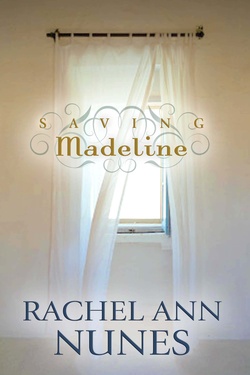
Several times I’ve felt inspired to write a certain story. These include Ariana: The Making of a Queen, To Love and To Promise, A Heartbeat Away, Fields of Home, Saving Madeline, Imprints, and my picture book Daughter of a King. I’d go so far to say that in most of my stories there is at least one scene I’ve put in for no solid reason except that it had to be there. Sometimes I believe the inspiration was for me to learn something that would be helpful for myself or for others I meet. At other times, it was for certain readers (judging by the letters I received), and at other times it was to offer a better solution than what is available in the national market.

What do you hope to accomplish through your writing?

Authors often talk about their deeper purposes, but I have the same goal now as when I began writing. I want people to be able to immerse themselves in my work, to be entertained, and uplifted. I want to give readers a glimpse into new worlds, show them new ideas, and maybe along the way lighten their burdens in some way. ■


Imprints

Chapter One from the novel by Rachel Ann Nunes.

From Imprints, by Rachel Ann Nunes, © 2010 Nunes Entertainment, LLC. Used by permission.

My breath came faster as I stared into the shoe box sitting on the counter at my antiques shop. Not one of the items inside was exceptionally valuable or remarkable in any way—a kaleidoscope of bric-a-brac and childhood keepsakes that had once made up a young woman’s life.

A missing young woman.

I met Mrs. Fullmer’s swollen, tear-stained eyes, small and brown inside the fine scattering of wrinkles that were evidence of her suffering. Her hands tightly gripped the edges of the box holding her daughter’s possessions, though the box sat on the counter between us and needed no support.

I didn’t want to do this. I didn’t have to. If I refused, Jake would escort the couple quickly outside and make sure they didn’t return. I was very near to fainting as it was, though more with fear of what I would discover than of what the box contained.

“You okay, Autumn?” Jake’s voice was both worried and curious. He smiled tentatively, his teeth white against his brown skin.

“I’m fine,” I said.

A soft snort came from Mr. Fullmer. “Maybe we should be going.”

An unbeliever. I didn’t blame him. I didn’t believe it myself for the first six months, and I hadn’t told anyone about my strange gift for a month after that.

I’d confessed to Tawnia first, and that my practical sister believed me was a testament to the connection between us—despite our having spent the first thirty-two years of our lives apart.

Jake Ryan was the second person I’d told. Solid, reliable Jake, who was gorgeous despite—or perhaps because of—his chin-length dreadlocks. When he was at the counter in my store, women bought more of my antiques just to see him smile or to have an excuse to talk to him. He had increased the sales in the Herb Shoppe considerably since I’d sold Winter’s business to him. Winter Rain, my father.

Silently, I met Mr. Fullmer’s gaze and saw him notice my eyes, his mouth opening slightly in surprise. People are always surprised when they look at me long enough to actually see my eyes. I didn’t give him credit for seeing, though, as we’d met already once before and because he’d been staring at me for the past five minutes, searching for obvious flaws. He took a step back, which I took as defeat.

“If there’s any chance Victoria left a clue,” Mrs. Fullmer said in her breathless voice, “we have to try. She’s been gone for months.”

When no one spoke further, I slowly removed the oversized antique rings from my fingers and handed them to Jake, the comforting, pleasant buzz they gave off ceasing the moment I released them. I reached for an object. A hairbrush. I held it in one hand, running the fingers of my other hand over the polished length, pushing at the hair-entwined bristles.

I saw a face in a mirror, a narrow, pretty face that I knew from the pictures they’d shown me as belonging to Victoria. Her hair was long and blonde. There was a sound at the door and a flash of an angry man staring down at me, words falling from the lips: “You are not going tonight, and that’s final!” The urge to throw the brush at the face, an urge at least nine months old. Nothing more.

I shook my head and set the brush back in the box. I’d recognized the man as Mr. Fullmer, but the scene hadn’t told me anything except that once last year Victoria had been angry enough to want to throw the hairbrush at her father. She hadn’t done it, though, and the memory was already fading. Mentioning it now wouldn’t help them find her. I moved to the next item, passing purposefully over the new-looking socks and worn swimming suit.

I’d learned by touching everything of Winter’s that distinct feelings remained intact only on belongings connected with great emotion: objects a person treasured most; items held while experiencing extreme levels of joy, fear, worry, or sadness; articles that weren’t often washed or forgotten.

For Winter that meant the colorful afghan my adoptive mother, Summer, had crocheted, the first vase I’d made on my wheel when I’d gone through my pottery stage, his favorite tea mug with the sad-looking puppy on it, his plain wedding band. And of course, his cherished picture of Summer, the one I’d dropped in shock and surprise on the day of his funeral, causing the glass to shatter. It was the first object that had “spoken” to me.

Other objects gave off a muted sensation, a pleasant low hum, but no clear images or scenes I could relive when the burden of missing Winter became too great. I never found anything among his possessions that contained angry or hateful imprints. He must have long ago come to terms with those feelings. My adoptive father had been an exceptional man.

My hand settled on the journal from the Fullmers’ box, but I could tell right away this hadn’t been a real journal for the missing girl. No emotional imprints, except perhaps the barest hint of old resentment. If she’d written in the book at all, it hadn’t been willingly. I picked up the prom pictures instead. Victoria was a slim, pretty, vivacious girl, and her date equally attractive, but though he was nice enough, the girl hadn’t been attracted to him. The feeling had been strong enough to leave a faint residue of distaste on the picture when she’d held it in her hands as recently as six months earlier, which would have been mid-December, several weeks before her disappearance. I set it down.

The shell hinted at the ebb and swell of the ocean, the girl’s possession of it not long enough or felt deeply enough to make an imprint. An old compact mirror with jeweled insets radiated a soothing tingle. Most of my antiques were like that, the emotions clinging to them soft and old and comfortable. I believe that feeling is why I went into the antiques business. Perhaps the objects had quietly hummed to me all along, though I hadn’t yet understood their language. Even in the old days there had been attractive items I’d never pursued, and now that I was conscious of my paranormal gift, or curse, as I sometimes thought of it, I think those were the antiques that had fresher, negative imprints, perhaps even violent ones. A cast-iron statue at an estate sale last month had flashed a terrifying image of crushing a human skull. No way did I want that statue in my shop. I didn’t care that my markup would have been phenomenal.

I let my hand glide over several more objects in the Fullmers’ shoe box, scanning for emotions that might be clues for Victoria’s mother. The letter (contentment long faded), the porcelain figurine of a ballet dancer (sleepy dream of the future), a book of poetry (whisper of an old crush). To tell the truth, I wasn’t positive any of these weak impressions were real or if my mind showed me only what I expected to find. These items had obviously been important to the missing girl at one time, though, or she wouldn’t have kept them all these years.

Not until I reached the black velvet jewelry box did I feel a jolt. My hand closed over it, my palm covering the small object completely. Even through the box, the emotion was strong—too strong to come from even my active imagination.

“What is it?” Mrs. Fullmer asked. “That’s my daughter’s—” She was hushed by her husband, who probably thought I would make something out of whatever information she might let slip. But I didn’t need anything from the mother to tell me the girl had loved whatever was inside.

I opened the box and took out a fine gold chain with a heart-shaped pendant that sported a diamond at the top where the heart dipped in the middle.

A beautiful piece, though decades outdated in style. Not outrageously expensive but worth more than many girls in their first year of college could afford. I knew Victoria had loved it because it had been her grandparents’ high school graduation gift to her mother and then her mother’s to her. Yet the overall feeling emanating from the piece was not love but guilt, one emotion overlying the other.

I gently rubbed the heart between my fingers, my eyes closed. Jewelry often retained the best imprints, which was why I’d saved the velvet box for last. “She wants to take it with her,” I said aloud, “but everything she has will become theirs, and she knows it’s not right to give them her mother’s necklace. It should stay in the family. She thinks you will give it to Stacey when she’s gone.” I very clearly felt Victoria replacing the necklace with a sigh. She hadn’t wanted to pass it to her younger sister, and that’s where the guilt came in. She’d wished there was a way to follow her dream and keep both her family and her necklace.

Several other flashes of memory rushed like water through my hands to my brain: a college campus, a park, a man dressed in a flowing, button-down shirt with a wide, pointed collar and elaborate cuffs turned upward, the tails of the shirt untucked. He had kind eyes and longish black hair, and he was surrounded by younger people wearing white T-shirts.

“Yes, I’m going with you,” Victoria said to him, her hand going to the pendant at her throat. “But I have to go home first. There’s something I have to do.”

When I opened my eyes, everyone was staring at me. “She left on her own,” I said. “Or at least she was planning to leave with a man in an old-fashioned white shirt. He had blue eyes, black hair down to his collar, a short beard. She wasn’t the only one to go with him. Did you ever see her wear a white T-shirt with navy blue lettering that says Only Love Can Overcome Hate?”

Mr. Fullmer paled noticeably, but Mrs. Fullmer was nodding. “She had one.”

“A cult then,” Mr. Fullmer sputtered. “That’s what you’re saying.”

I shrugged. “Maybe a commune.”

“Same difference,” Mr. Fullmer said.

“I can’t say for sure. I do know that she believed anything she took with her wouldn’t be hers anymore. She wished she didn’t have to choose between them and you.” Almost as an afterthought, I added, “They were selling Christmas cakes at a park. Near a university, I think. That was when she met them.”

“She came home early on break,” Mrs. Fullmer whispered. “She’d been having a hard time, but we didn’t know until later that she missed all her final exams. She never registered for the next semester.”

That explained the despair Victoria had left imprinted on the necklace. “She was more hopeful when she met them,” I said, meaning it as a comfort.

“Stupid child.” Mr. Fullmer’s gruff voice was tinged with pain. “She should know better than to talk to crazies.”

“She could be in danger,” Mrs. Fullmer protested. “She’s too young to know better.”

I didn’t respond. I didn’t need to. There was nothing more I could give them. I stood back from the counter and waited for them to leave. Jake handed me my rings. As I slid them on, his warm hand touched the middle of my back, and I was grateful for the support. Last September I’d begun entertaining the thought that we could be more than friends, but our relationship remained mostly linked to business. I didn’t mind too much. After my sister, he was my best friend, and since Tawnia had married and was now expecting her first child, her attention was divided. At this point I needed Jake’s friendship more than I needed a romance.

The Fullmers were leaving, and I watched them go. Mr. Fullmer, his rigid back clad in a dark suit, was carrying the box of his daughter’s belongings. His sandy hair was thinning in the back. Jake had a natural remedy that would halt the hair loss, but that wasn’t why he’d come, so I remained silent. Next to him, Mrs. Fullmer looked shrunken, her shoulders hunched forward, her blonde head bowed. She clung to her husband’s arm, staggering more than walking. Below her dress I could see a run in the back of her nylons.

Before she reached the door, she paused, stepped away from her husband, and retraced her slow steps to the desk. “Thank you,” she whispered. She looked around somewhat frantically before her hand shot out to grab the Chinese thirteenth-century Jun Yao vase that sat in glory next to the counter. It was wider than it was tall, a dark, glossy red piece with bright blue highlights. The sale price was seven hundred dollars and a steal at that because it was in extremely good condition. I’d found it in a basement in Kansas when I’d sheltered with some people during a tornado.

“I want to buy this,” Mrs. Fullmer said.

I arched a brow. I didn’t think she really wanted the vase, but business had been slow, and I wasn’t going to turn her down. I took it from her, enjoying the pleasant tingle of the thoughts that surrounded the piece. Not an image I could see but nice and comforting feelings. At least one person who’d owned this vase had cared for it lovingly and had lived a life of quiet contentment. I wrapped the vase as Jake rang up the sale. Mr. Fullmer waited by the door, impassiveness and impatience alternately crossing his stern features.

As I passed the bag with the vase to Mrs. Fullmer, she caught my hand and pressed something into it: the velvet box with the necklace. “Keep it for a little while. Maybe there’s something more.”

I shook my head. “There’s never anything more. I’m sorry.” The last words felt ripped from me, not because I didn’t mean them, but because I knew they wouldn’t help her suffering.

She made no move to take back the box. “Please.”

I nodded, sighing inside where she couldn’t see. It was a false hope, and I didn’t want to give her that, but I wasn’t strong enough to refuse.

She smiled. “Thank you for the vase.” She turned and joined her husband.

I didn’t feel guilty about the vase because they could obviously afford it, but I did feel bad that she might think buying it could help me see something more.

“That was nice of her,” Jake said.

“Nice?”

“Buying the vase. I told her when she called that you didn’t accept money, but I did suggest that she might want an antique for her house. This way you earn something for your trouble. That’s important, especially if it makes it so you can’t work the rest of the day.” As he spoke, he was pushing me onto the tall stool I kept at the counter. Then he disappeared into the back room and returned with a small book of poetry that my parents had written for each other for their wedding. I took it willingly, grateful for the positive emotions that flowed into me. Touching it, I could see them as they held the book in turn and exchanged their flower-child vows in the forest, Summer with a ring of flowers on her head and Winter with his prematurely white hair in a long braid down his back. Though this session hadn’t been all that draining, I felt full of life as I witnessed their silent, love-filled exchange. I hoped these feelings would never fade from the pages. Almost, it was like having them with me again.

I kept the book at the store because not all imprints were as relatively easy to stomach as Victoria Fullmer’s. Last month I’d been asked to touch the bicycle of a ten-year-old girl named Alice, who had vanished while riding her birthday gift. At first there had been only elation at her new toy—until the dark-haired man had stood in her path and torn her from the bicycle. I’d fainted with her fear. Later my description of the man had allowed the police to make an arrest and had eventually led them to little Alice. Too late. The memory still haunted me sometimes when I was alone. I’d had to sleep with my parents’ book for a week—and the picture of Summer as well. I tried not to do that often, afraid my parents’ imprints would be overwritten by my own.

Jangling bells told us someone had entered the Herb Shoppe. Jake looked at me. “You sure you’re okay?”

“I’m fine. Go ahead.”

He walked around the counter and sprinted to the double doors that joined the two stores. My father had put in those doors back when Jake had worked for both of us. Jake and I still helped each other out, using a networked computer program to keep track of sales so we could ring people up at either counter. We also shared two part-time employees, Thera Brinker, who worked early afternoons and Saturdays, and Jake’s sister, Randa, who came after school and during special weekend sales events. Thera mostly worked for me and Randa for Jake, but they crossed over when either store had a rush of customers. It worked for all of us.

“Jake,” I called. Too late, I thought. He had disappeared, but his dark head popped back in. “I’m going for a walk, okay?”

“No problem. I’ll keep an eye on things until Thera gets in.”

I knew he would, but to make it easier for him, I locked my outside door on the way out, flipping over the sign that told people to use the Herb Shoppe entrance. That way Jake would be aware of any customers coming to browse my antiques, and they’d have to pass by him to leave. Only a few pieces in my inventory were really expensive, but all together, they added up to my entire future.

The cement felt warm against my bare feet, and I relished the sensation. I couldn’t believe the outrageous shoes women put up with these days. In my late teens, when I’d gone through a shoe phase, my back had ached constantly, and once I’d spent a month in traction because of the pain, so it didn’t make sense to continue wearing shoes. But then, I didn’t understand why people would willingly take preservatives into their bodies, either. Or ruin perfectly good food in a microwave. I liked to feel the earth under me—or as close as I could get with all the cement. There was a better connection with nature that way, even in the city. Thankfully, not wearing shoes wasn’t against the law, not even while driving, though many people, including police officers, believed it was, and there were no health ordinances against bare feet. I could even enter the post office. Frankly, I was more worried about what germs my hands picked up on doorknobs than anything my feet might encounter, and I never had to deal with sweaty, stinky feet.

I didn’t mind being different. I’d been raised that way. Other children learned their letters and mathematics. I’d learned about herbs and human nature. I’d called my adoptive parents by their first names, Winter and Summer, and the only reason I’d gone to school at all was because I’d wanted to, even though every October the principal would threaten to call child services until I took shoes to school and kept them under my desk. Summer would have been happier teaching me at home, and I was always glad that I had stayed with her that last year, when I was eleven, the year she’d died of breast cancer.

My hand grazed the box in my pants pocket. I felt not the velvet but a flash of emotion. Victoria had loved this necklace, and she’d loved her family. Yet she’d chosen to leave them. A well of bitterness came to my heart. I’d give anything to have Summer and Winter alive and in my life. I could no more easily have left them than I could have cut off my own arm.

What had possessed her? Was there more to her family than I’d seen? Had her father’s anger driven her to seek people who might love her unconditionally?

It’s none of my business, I thought. My part was over. They knew she’d gone of her own will, and they knew where to begin looking. I’d even been compensated for my trouble. In a few days, I’d mail Mrs. Fullmer the necklace so she could eventually give it to her other daughter.

Slowly, I became aware of my surroundings. I’d walked long and far, or what most people would consider far in these days of cars and motorbikes, and my bare feet had taken a path I hadn’t anticipated. I’d ended up near the Willamette River, downstream from the Hawthorne Bridge, where the bombing had taken place and where Winter had died. We’d been on the bridge in my car when the explosion collapsed the structure. I had come up from the cold, heavy depths, and he hadn’t. Thirty others had also lost their lives in the bombing. Those responsible had been punished, but the holes in the lives of those left by the dead weren’t easily filled.

I hadn’t been this close to the river since Winter had been found a week after the bombing, and it was strange to see the rebuilding in reality instead of on TV. The construction area was fenced off, so I couldn’t go all the way to the riverbank, but I could see the bridge had come a long way in the past six months. The promise to have the bridge ready for traffic in less than three years would probably be met. Not that I’d ever had any doubts. My brother-in-law, Bret, was the director of the project, and he was conservative in his estimates. He was conservative in almost everything. That’s part of what my sister loved in him.

My tumbling thoughts halted abruptly as I caught sight of a man wearing coarse brown pants and a white, old-fashioned, button-down shirt that looked all too familiar. He stood in front of the high chain-link fence surrounding the construction site, handing out flyers with his companions—young people of all sizes and shapes, carrying baskets and wearing royal blue T-shirts with white lettering that proclaimed Love Is the Only Thing That Matters. ■

Book cover images courtesy Rachel Ann Nunes.

Leave a Reply