
Robison Wells
It seems like you’re involved in so much more than just writing. How would you describe yourself and everything you do?
I think that I would probably describe myself as a reluctant Renaissance man. I didn’t set out to have such a wide variety of career experiences; I just did what seemed interesting at the time and ended up with a schizophrenic résumé.
I’ve always loved the visual arts and design, and as a teenager that was my creative outlet: I painted, I designed sets for the local theater, I drew houses for real estate ads. That last one was the most influential; when I came back from my mission, I started college as an architecture major. That didn’t last long, though, and I bounced through a couple other majors—history and anthropology—before ending up in political science. I started the program the January after 9/11 and consequently emphasized in the Middle East and did my senior thesis on the political efficacy of modern terrorism.
Consequently, when I graduated, I couldn’t get a job. So, I fell back on architecture and went to work for a wood products company, designing floor and roof systems. I sold wood. It was awesome.
During college, I got my first idea for a book. However, I’d never wanted to be a writer and had no interest in being an author. But my brother, Dan, was the opposite: he’d always wanted to be a writer, and at the time he was at BYU working on an English degree (he is now a full-time horror writer.) I called him up, told him my book idea, and told him he ought to use it for one of his books. He instead invited me to write a couple chapters and come down to his writing group. I ended up being the first in the group to get published.
I’ve been involved in the LDS writing world for several years, as a board member of the LDStorymakers, a writer’s guild, and in 2007 I founded the Whitney Awards, an award for novels by LDS authors.
And, because I have to pay the bills somehow, I returned to school and got my MBA in marketing.
Tell us about the Whitney Awards.
My reasoning for starting the Whitney Awards was essentially a move from pessimism to optimism. When I first got published in the LDS market—even before the book was released—I immediately ran into a lot of the standard criticisms about LDS fiction. I’d tell someone that I’d written a book, and they’d be excited and ask about it, and the instant they realized it was an LDS book you could see the interest fade out of their eyes. After a while I became almost embarrassed that my book was LDS fiction.
So, I decided I was going to do something about it. On my website I started something called the LDS Fiction Review Database, and my goal was to link to every single review of every LDS fiction book. At its peak, I had several thousand links posted. My reasoning was this: in order to gain respect, LDS fiction needs to improve, and the best method to improve is more critical evaluation.
I maintained that database for about a year, but as I got more involved in the LDS market I came to realize that, while, yes, there was a lot of lousy LDS fiction, there was an awful lot of great stuff too. My complaint all of this time had been with the authors: they needed to write better books. And, I thought, having public, critical reviews would “encourage” them to do that. My big epiphany was that I shouldn’t be targeting authors—I should be targeting readers. There are lots of great books available, but it’s hard to sift through the mediocre and find the amazing.
That was the ultimate genesis of the Whitney Awards—I was looking for a way for LDS fiction to gain more respect. Now, when people claim that LDS books are lousy, we can point to the Whitney Award winners—to Coke Newell’s On the Road To Heaven or Sandra Grey’s Traitor, or many others—and hold these up as examples of LDS fiction that’s every bit as good as anything published nationally.
How did your blog Six LDS Writers and a Frog come to be? How has it helped your career? And why a frog?
That blog is the brainchild of Sariah Wilson. She approached me and Jeff Savage about it back in January of 2006. It’s been a lot of fun. I may be wrong, but I think it was the first collaborative blog with LDS novelists. There are several now, but we were the first, and I think that’s contributed to the success of the blog.
The name is half mine and half Sariah’s. For some reason, I said that I didn’t want a creative name—I wanted something that was extremely descriptive. I think I wanted it to be easily found by search engines, or something like that. So, I suggested “Six LDS Writers.” When Sariah set up the blog, she thought it needed something else, so she asked her son (who was a toddler) and he suggested a frog.
Over the years we’ve tried to do something with the frog. Kerry Blair, in particular, likes to have frog-related contests and that kind of thing, but generally the frog is ignored.
From your experience with writing and critique groups, can you tell us some pros and cons of being a part of a critique group?
Writing groups are awesome, and I attribute a huge amount of any success I’ve had to my writing groups.
My first experience with a writing group was a group of guys down at BYU. I had never tried writing a book before, and they were all extremely serious about publishing. They taught me the basics of writing and storytelling. They were also merciless. This wasn’t a support group for authors—this was a group of professionals who were determined to become masters of their craft. And the results speak for themselves: I was published, soon to be followed by Brandon Sanderson, and later Dan Wells, my brother. The group was really a powerhouse.
I bounced around through a couple other groups over the years but spent at least four years without a group before landing in my new one, another powerhouse: Jeff Savage, Annette Lyon, Heather Moore, Michele Holmes, and LuAnn Staheli.
All that said, writing groups are tricky. While they can be a huge help, they can also make the writing process harder. One of the toughest parts of getting feedback is sifting through the bad stuff and taking the good stuff. Even in a great group with awesome writers, you still get some advice that isn’t right for your book. You just have to know what to keep and what to throw out.
The bigger problem, for me at least, is the need to compartmentalize the critique from the rest of my writing. Going to writing group and getting negative feedback on a chapter can be very deflating. If I’m not able to put that aside and keep moving then I’ll end up obsessing about the comments and revise and revise instead of writing new stuff.
Is there anything you wish had turned out differently in your writing career so far?
Most of my regrets are with how I treated my writing. Early on, I had a very laid-back approach to the books that I think hurt me a little bit. I should have polished them more and spent more time honing my craft. With my first and second books I really loathed rewriting and would avoid it whenever possible. I wish I could go back and give them both a thorough cleanup.
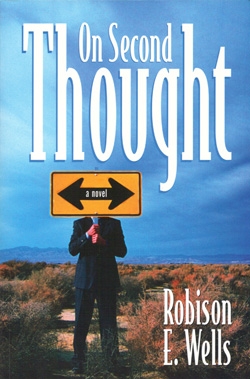
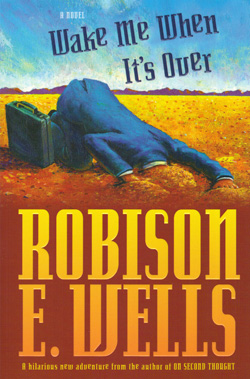
I’m also unhappy with the treatment of my second book, Wake Me When It’s Over. Of my three novels, it’s the one that most people tell me they liked best, but I cringe every time I think about it. It had lots of problems, the first of which is that it was a weird genre: it’s a political thriller, dealing with kidnapping and counterfeiting and espionage, but it’s also very funny. I don’t think the publisher quite knew what to make of it, especially since it was a follow-up to On Second Thought, which was a lighthearted romantic comedy. So, they essentially marketed it as the same type of book. First, they gave it that goofy title (which I’ve hated since day one), and the cover has the statement “Another hilarious adventure from the author of On Second Thought.”
And then the cover is remarkably similar to On Second Thought’s cover (although Wake Me’s is a terrible version, with terrible art, terrible colors, and a terrible font). And—surprise!—it sold very, very poorly.
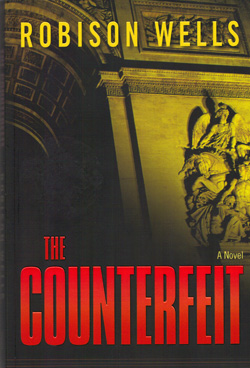
When it came time to publish The Counterfeit, which is the sequel to Wake Me, the publisher tried very hard, both in design and marketing, to distance Counterfeit from Wake Me. And I took great pains to not make Wake Me required reading. They did an awesome job with the cover on that one, and sales were three or four times what they were on Wake Me. So, a happy ending.
What important advice would you give to an aspiring writer?
Back when I had that first idea for a book, my brother gave me some advice that changed my life. He said “Everyone says they have an idea for a book. Everyone says that one day they’re going to sit down and write the great American novel. The difference between authors and everyone else is that authors actually do it.” That would be my advice for aspiring writers: write. Even now, having written seven novels and published three, I am amazed how beneficial it is when I force myself to write when I don’t want to. Every one of my books contains passages that were free writes—forcing myself to push through writers block without knowing where I was going—and it turned out so well that it stayed in the book.
Orson Scott Card once said that your first million words are crap. While I don’t know if I entirely agree—I’ve probably only crossed the million word mark in the last few years—it’s definitely true that the more you write the better you get. The key is to keep at it, to fight through a couple lousy, unpublishable books and not let that discourage you.
It reminds me of my friend Brandon Sanderson: his sixth book was the first to be published, but by the time that it sold he was already writing his thirteenth. There’s a reason that Brandon is so successful: he writes constantly.
What are you working on next? Where will your writing take you in the future?
I’ve made a pretty big departure from my previous books. I recently finished a young adult science fiction novel that is currently agented and is getting some interest nationally. I’ve got my fingers crossed.
About a year ago I decided that I wanted to set my sights on the national market. This decision was not because I didn’t like the LDS market—I love the LDS market. But I want to be able to write full-time, and that’s next to impossible with LDS books.
I’m not sure where I’ll end up. For one reason or another, I’m not really interested in translating my previous writing style and genre into the national market. YA seems like a good fit right now, but that might change later. I’m not one to plan too far ahead.
So far you’ve published three novels: On Second Thought, Wake Me When It’s Over, and The Counterfeit. Where did the ideas for each of these books come from?
On Second Thought was written as a reaction to my previous novel-writing attempt, which was a train wreck of a fantasy. I’d tried to write something very epic and grand but didn’t really know where I was going with it or even how to structure a book. At the time I wasn’t even an avid reader of fantasy. So, as that manuscript was winding to an end, I decided to take the classic advice of “write what you know.” So, I wrote On Second Thought. It was based on a little town I’d lived in while on my mission, and it’s filled with a lot of autobiographical experiences.
Wake Me When It’s Over was written as my undergrad experience was winding down. I was finishing my political science degree, doing a lot of research on terrorism, and I felt like I was becoming a much better writer. In between Wake Me and On Second Thought, I’d written a murder mystery that I never submitted to my published—I decided it was too dark and grisly to be a good follow-up to a romcom. So, of course, I instead wrote a book about kidnapping and terrorism, only funny.
The original idea for the book came from watching something on the news about the Secret Service and about the reason they spend so much money fighting counterfeiting: their primary concern isn’t a single criminal making fake bills to buy a TV. Instead, they worry that widespread counterfeiting will weaken the value of the dollar. So, I thought it would be interesting if a terrorist organization decided to attack the United States economy via widespread counterfeiting.
My third book, The Counterfeit, is a sequel and follows the same characters. However, after I wrote the book, my publisher came back to me and said: “We like it, but can you make it more like The Da Vinci Code?” Well, I obviously wasn’t too happy with the idea, but after my initial hyperventilation, I was able to take my initial story (that was already steeped in conspiracies) and add a few elements: foreign locations, more historical tie-ins, etc. It was more of an atmospheric change than a plot change. And, I’m happy to say that the finished product turned out much better than the original.
What is it you think makes you want to write?
I write for myself. When I compare myself to my other author friends, I think I have a very different perspective, and I think a lot of that comes from the fact that my love for writing and books came relatively late in life. I didn’t like English in high school and I never read any of the books. To this day, I hate the public library. (These kinds of statements don’t receive a lot of agreeing nods in writing circles.)
Because I came to writing late, and was never an avid reader before I became a writer, I think I never came to define myself as a reader. I never had that oft-talked-about experience of walking to the library as a kid and discovering new worlds. Consequently, I don’t really think about that when I write.
I write because I love it. That’s not to say that I don’t enjoy hearing feedback from readers, because I definitely do. But I write because it’s fun.
Your books exist within Mormon culture, but they mostly resist any sort of didactic impulse. What draws you to writing about Mormons and Mormonism? How do you think Mormonism affects your writing? What do you think your writing has to say about or offer to Mormonism?
There’s a theme that runs through all of my books, even the manuscripts I’ve written for the national market, and it’s something that I think is a huge struggle among Mormons. It’s the issue of being okay versus being good. I know that sounds a little weird, so let me give a little background that might explain it.
When I was growing up, I never really questioned my LDS beliefs at all. My parents were very active in the Church, and so I was very active in the Church, and I never really considered anything else. I graduated from seminary, got my Eagle, and prepared to go on a mission. And it was there that I suddenly ran into problems. I faced spiritual challenges and crises of faith that I’d never expected; it had never crossed my mind that my mission would be spiritually challenging. I’d always heard stories about the physical challenge, but never much of a spiritual one. And I had never expected that the problems—the temptations, if you want to call them that—would come from the other missionaries.
If someone had handed me anti-Mormon literature, or offered me a beer, or told me to steal something, it would have been easy for me to push it away and Choose the Right and Hold to the Rod. But what I was faced with instead was an almost complete, widespread disregard for mission rules. It wasn’t just little rules, like sleeping in or not having companionship study, and it wasn’t just a few elders. It was big stuff, and it was everybody.
I remember that on my very first day, as my trainer was driving me to my first area, he said, “I’d guess about seventy to eighty percent of the mission is apostate.”
This really caught me off-guard, and it caused me all sorts of problems. But the biggest issue for me is that nothing we were doing—yes, I got plenty involved for a while—was technically breaking any major commandments. There were no biblical commandments against staying in your apartment all day, and there were no commandments against driving four hours from your apartment to visit friends. These things were perfectly fine for everyone in the world to do—just not missionaries.
Yes, I knew that what I was doing was against the rules, but was it really “wrong”?
My mission shook me up for a long time, and in some ways I’m still dealing with it. And, even though I never intentionally do it, my writing addresses these issues. In Wake Me and The Counterfeit, the two main characters are essentially the two sides of me: one is active and a nice guy, who goes about his life fairly casually; the other is driven by faith, strictly obedient, and sees things in black and white. Throughout the books there is a constant pull between them, and I think that it’s just my internal dialogue: what does it mean to truly have faith, and how is that reflected in your behavior?
This is making my books sound much more religious than they are. Like you said in the question, I don’t want my books to be didactic or preachy, and I never set out to make any kind of spiritual statement. I generally just create my characters and let them act however they would act. But I do find it interesting that this is the direction where my subconscious tends to go. Even in my most recent book—the completely non-LDS young adult science fiction—there is a character that is conflicted by what it means to be “good.”
Your books are very straightforward about the gospel. What do you feel that has added to your books?
My first published book, On Second Thought, was chock-full of LDS cultural references—but with very little spirituality. It was a comedy, and I didn’t really feel the need to give the book a moral. Part of this was that I was still very new to writing, and I’d never really thought about a character arc at all. I just had a lot of funny stuff crammed in there, and I figured it was good. My publisher, however, wanted the book to have more of a point. Depending on your artistic philosophy, this could be a good thing or a bad thing. I didn’t fight them on it, and ended up tacking a moral on. It’s unobtrusive and most people miss it entirely. That’s fine with me, since I just wanted to tell a funny story.
That’s really been the key throughout my books: I don’t set out to make a statement about the gospel. I don’t want to tell a story about conversion or faith. Instead, I’m telling a story about terrorism or nuclear proliferation or whatever, and I let my characters react. In my second and third books, the main characters are active LDS, so they react in a certain way: they pray, they talk about their faith, one gives the other a blessing. But none of this was done to present a moral. It was just done because that’s how the characters would have reacted.
When I first got published in the LDS market, I jokingly made a rule for myself: no one in my books would ever get baptized. I think that was a reaction to a lot of the LDS books I’d read as a teenager, where it seemed that half of them were conversion stories. I wasn’t interested in that. I didn’t write LDS books because I wanted to write gospel stories; I wrote LDS books because I wanted to tell interesting stories about LDS people. ❧